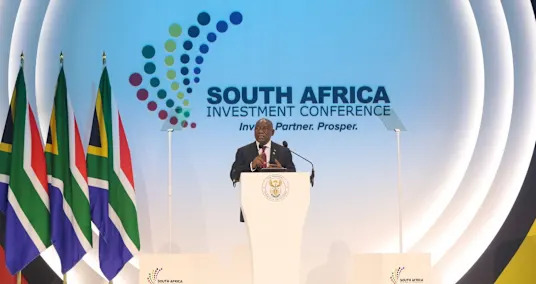
South African President Cyril Ramaphosa launched a nearly $200 billion investment drive aimed at accelerating economic recovery and industrialization in the face of growing worry over the impact of the Iran war on the continent’s biggest economy.
For more than a decade, South Africa’s economy has barely grown, leaving it with crumbling infrastructure and the need to create jobs in a country where one in three people are unemployed. Ramaphosa’s pitch to investors in Johannesburg this week was that South Africa has fixed the worst bottlenecks: He said the country is opening key sectors to private capital and is ready for large scale investments.
Ramaphosa said the effort will run through 2030 with delegates at the South African Investment Conference pledging $53 billion across 31 projects spanning energy, logistics, manufacturing, and digital infrastructure. They include Coca-Cola’s $1 billion expansion plan, and a $3.6 billion commitment from Sasol — the world’s biggest maker of fuel from coal — to upgrade operations.
latest_posts
- 1
 As tetanus vaccination rates decline, doctors worry about rising case numbers
 - 2Vote In favor of Your Favored Treat
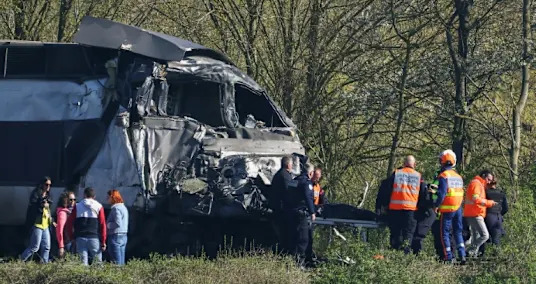
- 3French high-speed train slams into truck, killing TGV driver
- 4Florida has quietly become America's execution capital
- 5Elanco's drug gets emergency nod to treat deadly flesh-eating parasite in cats




- New Year's superstitions: Eating 12 grapes, avoiding laundry and other rituals that are said to bring good fortune
- Sean 'Diddy' Combs faces new sexual assault allegations, currently under investigation by Los Angeles Sheriff's Department
- What Middle East Conflict Could Mean For The World’s Largest Whale Shark Gathering
- Remarkable Spots for Hot Air Swelling All over The Planet
- Viable Monetary Tips to Advance Your Monetary Circumstance
- There was a bit of toilet trouble on NASA's Artemis 2 mission to the moon
- Share your pick for the tree that you love for its novel magnificence!
- Turkey key underlying issue as Israel, Greece, Cyprus hold summit
- OPEC’s No. 2 Producer Burns Its Own Gas—Then Buys Iran’s